


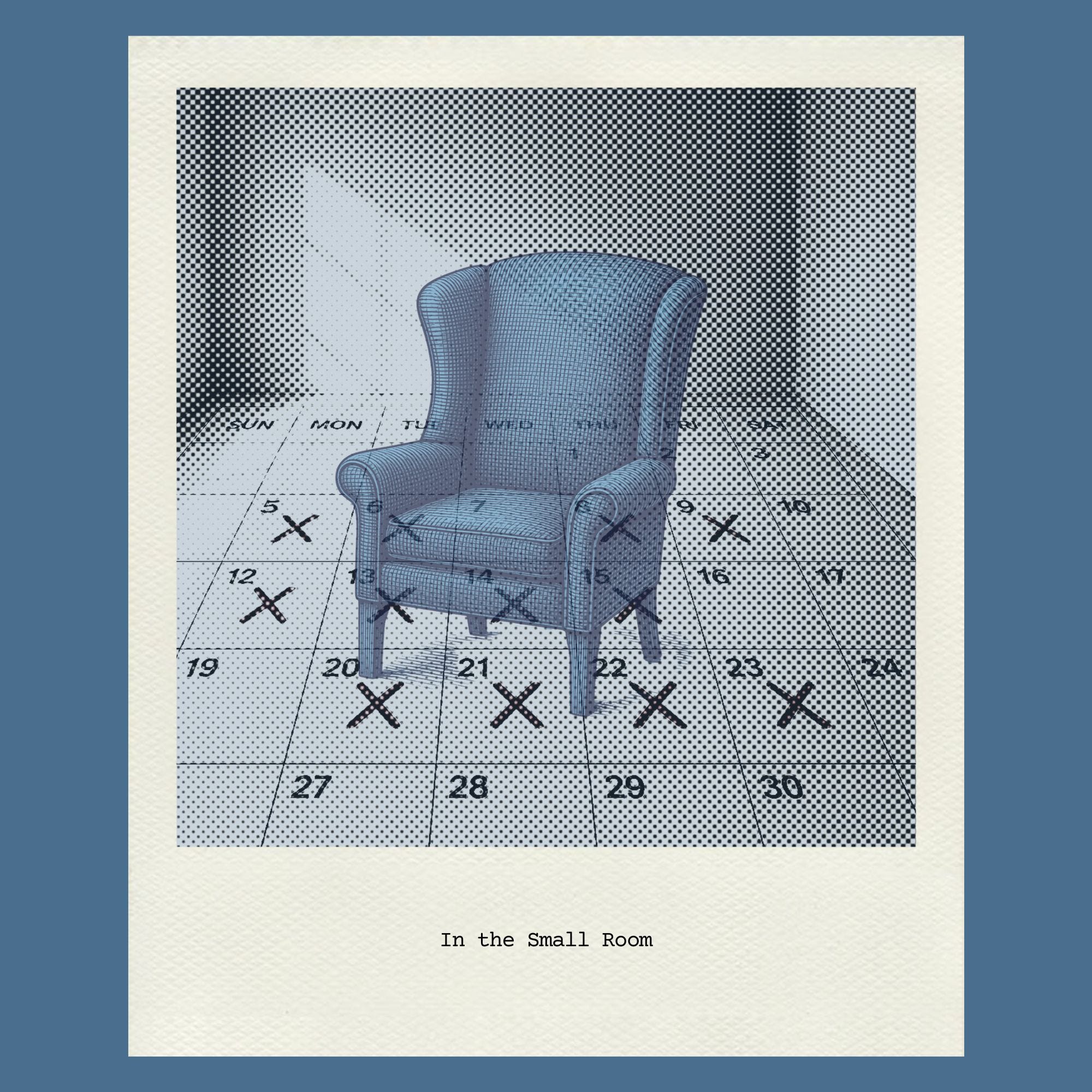
I’ll be in the small room again today.
I’m going to see my mentor and confidante — my psychoanalyst. A trusted guide, a wise older woman hired to think about me, to help me figure myself out. I recount tales from my tumultuous past and turbulent present. She listens and asks questions, and helps me see clearly what was happening then, what it means now. Helps me understand who I was and why, who they were and why, how we got here.
She listens.
I first went to her toward the end of my marriage, saying, “Everything’s fine, just a few little things to discuss,” expecting her to pat me on the head and send me on my way. When she heard the few little things, she urged me to return.
Her calm voice tried to keep me with my husband and then guided me as, drowning in loss and pain, I navigated through the first days, the first weeks and months of this frightening new solo life. I clung to my time with her as to a life raft of sanity. My biggest concern at first was that as our lives were blowing up, my children had endured a distracted, neglectful mother. I was determined to be a much better parent than my parents, but the guide map of my own upbringing was, to say the least, faulty.
How to do this most vital of jobs with no idea how to do it? How to make sense of my background with any degree of objectivity?
She said, “You should come more often than once a week.” I was reluctant. Cost and time were two huge worries, but need, too. Was that much therapy really necessary?
Yes, yes it was. I ended up seeing her twice a week, then three times, and eventually, by the year after the separation, four times a week. This was full-scale psychoanalysis; she reduced her fee to make the commitment possible, and I started to buy our clothes, gifts, and household items at Goodwill.
Still, suspicious of the process, for a year I resisted lying down on the couch. When you sit facing her, you’re chatting with an advisor. When you lie down, you’re a client or, worse, a patient.
But now I’m not ashamed. My beleaguered self needs the support of an expert medical professional. She’s healing me as surely as the doctor did who set my sprained arm or prescribed antibiotics for an infection. She is a doctor who’s healing me, but she’s also a companion. Four times a week, we embark on fifty minutes of intensely personal and emotional conversation, as she forces me to re-evaluate my response to life’s challenges. I’ve confided in her secrets never spoken aloud before. She knows me better than anyone, much better than my mother does. She’s another — in many ways far better — kind of mother: a clear-eyed ally, a sensible counsellor, an essential service. She’s re-parenting me.
Friends and family don’t understand. “Four times a week?!” they cry. It sounds so self-indulgent. Think of Woody Allen, on the couch for decades yet still a deeply flawed man. What was the point?
Not long ago, I was lying there talking to her about being a writer, my conviction that I’m inadequate, untalented, unworthy of the name. She listened gravely as I outlined my deficits. “Someone told me once I had the curse of ‘surface brilliance,’” I went on. “I’m shallow and impatient, don’t think or explore deeply enough, just want to get it done. I write fast. Good writers do not write fast.”
There was a pause, and then her voice. “What’s wrong with writing fast?”
As her words hit, I felt the top of my head explode. What’s wrong with writing fast? Well, it’s wrong because … because that’s how I do it.
In that moment, I realized how profoundly I handicap myself, how my lack of confidence undercuts me in every way. Rather than accepting that this is simply the way I do things and getting on with it, I paralyze myself with criticism and self-doubt.
What’s wrong with writing fast? Nothing. Nothing at all.
It’s as if the basement level of my psyche, my deepest self, was cluttered with fear, anxiety, negativity, self-hatred, and more bad stuff. I’d slammed that basement door, nailed it shut for years, to be able to cope with daily life. When the doctor and I began work, it felt like we were prying the door open, inch by inch. And then, when it had at last creaked open, we ventured down the stairs, step by slow, painful step.
Now we’re walking about that subterranean space, shining a light into the murky corners and cleaning them out. We’re inspecting what’s there, bringing it up into the sun, throwing it into the garbage, or, occasionally, reshelving it because it’s valuable.
This is work, one of my life’s big jobs. Slowly coming to terms with my past, my parents and childhood, my marriage and choices, and, importantly, my ex’s past too, is a gruelling slog, every session illuminating and tough. I can’t help fighting her sometimes, to protect notions I’ve stored down there for many years. But day by day, she’s helping me see other truths.
If we’d been meeting once a week, I’d have closed that door every time I walked out of her office, with a whole week ahead, seven days in the real world to navigate. But meeting so often, there’s no point resealing my psyche, because we’re going to resume the next day: tidying, sorting, explaining, clarifying, exploring. Hard, invaluable work.
She is a small woman sitting in a big chair in a tidy blue room. Her hair is yellowy-grey, frizzy, controlled. She wears good quality but unostentatious skirts, blouses, and jackets, sensible chunky heeled shoes, the occasional extravagant necklace. Her eyes are golden grey, I think, her voice soft and rather high. She writes down every word I say.
We’ve not spoken for six weeks because of the summer holidays. I’m looking forward to this meeting and will dress to please her, although what I wear is of interest to her only in what it says about how her client feels today. I can wear anything. I can say anything, and she will stay with me.
She will stay with me.
I wrote this fast.

To tell you the truth, I was concerned about sharing this story so publicly in Alice's Substack - yes, it's in my book, but in the context of all the other stories about my life and times. I wondered if it was too personal, too angsty. Thank you all for these heartening notes about the importance of therapy and truth-telling. Our community is a gift at this dark time in our world.
Author's note: this was written some years ago by a younger self. I say to my writing students, when we talk about the importance of therapy, "We all need a little, and some of us need a lot. I've had a lot, which accounts for the radiantly smiling face you see before you."