

School Lessons

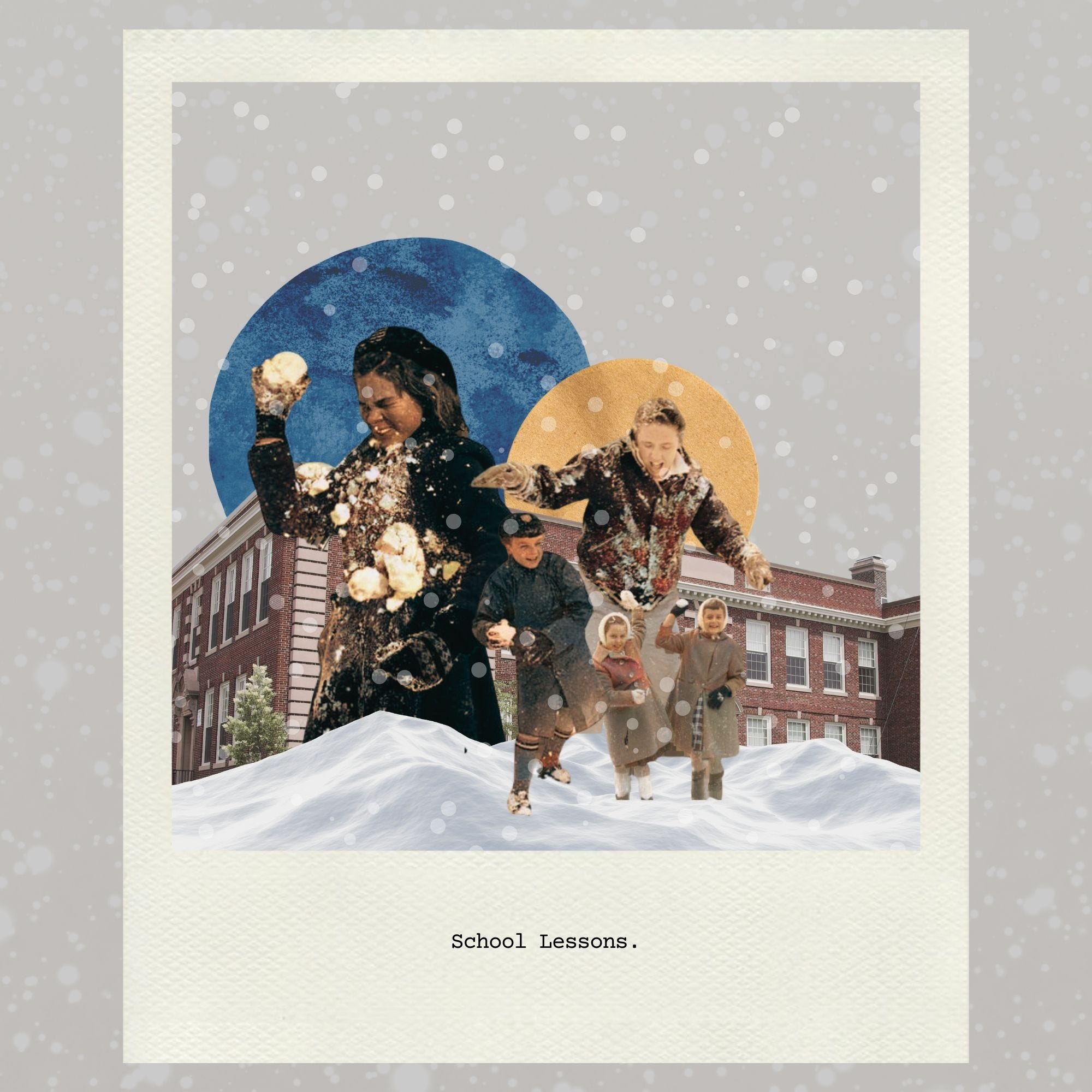
“Do not destroy other people’s forts was the first item on the agenda,” laughed Nora, putting her book bag down, settling in and ordering a glass of wine. “It isn’t easy,” she continued, “to run an elementary school, particularly when the snow arrives.” I leaned back and listened as she described the principal’s address at the assembly that morning.
As she spoke, I found myself drifting back to what feels like a million years ago, when I taught at an elementary school and the predictable chaos that ensued when the snow arrived. The bell would ring, and the rush of students to get outside would result in missing boots, mittens and hats, hair getting snagged in zippers, and at least one student insisting that lying on the floor was necessary in order to get a snowsuit on.
Then the chorus of stop pulling off my hat, gross - blow your nose, you smell would begin, and by the time everyone was dressed, they were always hot and sweaty and practically wilting. The door would open, the merciful cold air would hit us, and we’d tumble out together into pure joy.
Is there anyone immune to the magic of a first snowfall? Who doesn’t want to run outside, put their head back, stick out their tongue and feel the snowflakes land and melt? Ok, maybe not everyone has this same visceral reaction, but walk by a schoolyard after a first snowfall and I challenge you not to reconnect with your ten-year-old self.
Nora and I continue to share stories, me of the past, she in the present, but not much has changed. Kids roll and make snow angels, throw snow up in the air, and if nobody is looking, they fling it at each other. They mold, model and shape snow into creatures and even the old classic snowman (are we allowed to call them that?). They build forts, they carve out doorways, they make snowballs hoping they aren’t being watched. And then there is the predictable outdoor chorus.
They won’t let us in! It’s not fair!
You’re taking all our snow!
OW! You are not allowed to throw snowballs, I’M TELLING!
There’s pushing and shoving until someone falls on the fort or stampedes the fort or procures a bucket or branch or broom and demolishes the fort. A straw hut stands a better chance of survival in the schoolyard.
The bell rings, and now the floor is covered in puddles, Jasmine is crying because Branch put snow down her back, Mo has lost his mittens, and Jay’s glasses are bent. But their cheeks are ruddy, their noses mostly blown, and they settle in for what comes next.
Nora continues to describe how quickly the hands shoot up when the principal asks what they should do if they accidentally fall on a fort.
Say you are sorry!
Help build a new one!
Invite them to your fort!
However, and she laughs, they are silent when the principal ends the assembly bringing it full circle.
Remember, do not destroy other people’s forts.
The guilty ones look down and maybe even snicker, but things, miraculously, get better in the schoolyard.
I take a sip of my cabernet and look outside where the snow has started to fall again. There’s only so much snow to go around in the early days of winter, those days when it teases us with what is around the corner.
I remember how they knew that the first ones out are the first to claim their ground. It doesn’t seem fair but it’s just the way it is. They’d trudge back in, some filled with victory, others filled with fatigue, and some just wet.
We’d talk about current events—what’s happening here in our community, in our country and all over the world. They’d do math and science and poetry, and the day would always end with me reading aloud. Then, they’d pack up their water bottles and books and backpacks and head back outside, most likely tossing those backpacks into the snow to play in the moments before they had to get on a bus or hold a hand or group together and walk home.
Nora and I pay our bill, button up our coats, hug goodbye and head out. Il est entre chien et loup I think, grateful that I remember this description for dusk—it’s that time of day that is neither a dog nor a wolf. The streetlights turn on, and I begin walking home, veering away from the cars breaking too near the curb, looking into windows filled with people huddled around tables, or standing in line behind grocery carts.
Eventually, I turn into my neighbourhood and am greeted by three little snow people. It is snowing hard now, covering the grass around the snow creatures, the sticks that are their arms, and I lean over to blow the snow off the turquoise tuque on the largest one.
I live across the street from a school that is next to a park. I walk down the path and stop next to a massive mound of snow propped up against the fence of the school: the doorway gives away the unmistakable beginnings of a fort. I cross the street, open my door where Dora leaps on me and then launches into the snowy outside where she can’t stop rolling in the snow. Eventually her thick black coat has been transformed into what looks like the wool of a sheep.
In the morning, I take Dora for her walk and see that the fort is still there. I stop to let her roll and wriggle to her heart’s content. She finally flops onto her stomach, staring at me, her pink tongue hanging out, thoroughly content.
Don’t destroy other people’s forts.
It’s a school rule, but actually, it’s a good rule for life.
 | A guest post by
|
Loved this story with its wriggling, squirming children delighting in winter magic. it has left with me with a renewed gratitude to elementary school teachers for all they do, and the lessons they teach.
What a gem! Thanks for taking me back to 3rd grade where Elmer Bishop kicked my snowman then gave me a hug when he saw how devastated I was. You nailed it- the excitement of the first days of snow. Thanks.