

Where Memories Are Stored

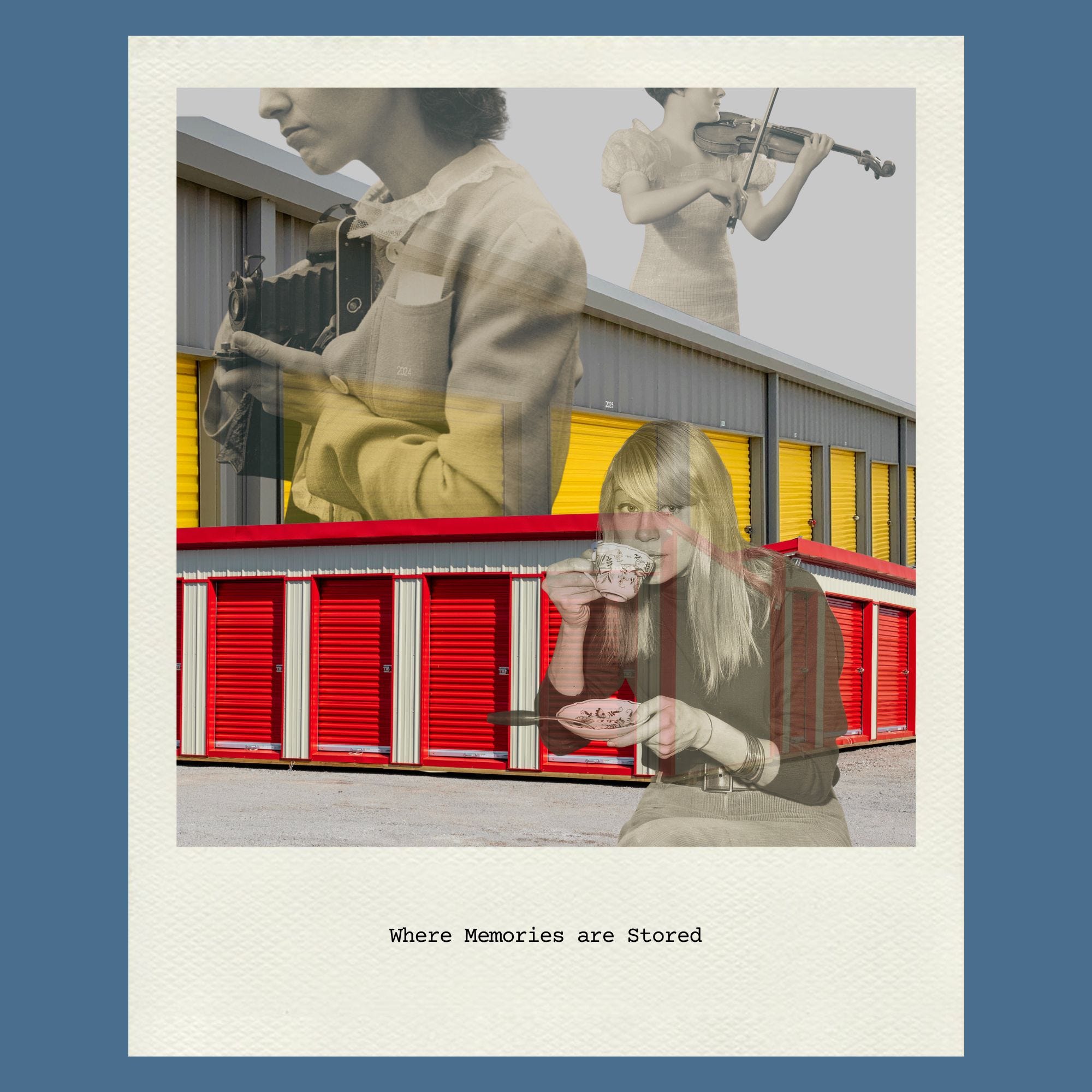
On a Saturday afternoon in early March, when hills of dirty snow line the roads, but everyone is happy because we can feel the possibility of spring in the air, we arrived at the storage depot not far from downtown Ottawa. Clearly, this was a popular day for visiting one’s stored stuff, moving things around and adding more items to fill the space.
As the two-storey garage doors banged open, a pristine, clean indoor parking lot was revealed. Drivers jockeyed for a space, their tires squealing on the painted floors. People grabbed trolleys and disappeared into the hive of shiny stainless steel corridors. The identical laneways, each labelled with a number, letter and elegant street name, were just wide enough for carts piled high to manoeuvre. Rows of storage lockers were fronted by metal doors which folded up or down with a shrieking sound and a thump. They were locked to the floors with identical locks. These cubicles come in various sizes and shapes, each with a not inconsequential cost per square foot. I was struck by how surreal it all seemed.
The off-site storage phenomenon began in earnest only in the past few decades — essentially for my generation. Everyone started to accumulate way more of everything than they needed for an entire lifetime. Now that my generation is downsizing and, for the most part, our children don’t want the treasures that we have amassed over our lifetimes, we have to either liberate or store them. A cheeky young friend mused that her generation will have lockers filled with recyclable cloth bags and IKEA furniture.
We had rented our first and hopefully last storage units during COVID when there were strict rules: one person per elevator unless from the same household, masks to be worn at all times and mandatory sanitizing of all surfaces touched. This was to store my mother’s furnishings for transfer to family and to a studio in a seniors’ residence. We were preparing to sell the house which my parents had bought in a new suburban development in 1966. The transition took over a year and cost over two thousand dollars in storage fees.
On this Saturday afternoon, when Covid was no longer an everyday threat, we were permitted to crowd large trolleys and complete strangers into one elevator. During the COVID days, I half expected to find a person with a comfortable chair and reading light ensconced in his or her locker, safely sequestered from the germs out in the real world. On this day, there was an air of relaxed festivity as people moved around without fear.
My husband and I were at the depot to assist our friend who had cleared out the estate of her deceased friend. The latter had already downsized but still had valuable antique furniture, carpets and paintings from his long career representing Canada overseas. These were being kept for eventual dispersal according to his will. My friend was also storing household goods from her own chalet, which she had sold after half a century of careful curating, as well as some items from her overflowing condominium.
Our job was to consolidate two lockers into a third. Not only does downsizing save a hefty monthly charge but my friend had negotiated two months free rent by moving from one floor to another. We loaded up trolleys and the cavalcade made its way to a second floor locker to add more goods and close it out, then again through the maze of metal and down the elevator to the final locker.
Opening up a storage bay door is exciting. What treasures will meet our eyes? Will they be organized or jumbled together?
Most lockers are filled with the accumulations of several generations and are visited by the owners either to marvel, to honour or to cringe. Every item, in every lockup, in all of the storage facilities around the world, was bought by, given to or gifted from someone. The quilt made by someone’s great aunt makes her smile. The driftwood lamp tells a story of cottage summers for a family. The dresser, painted over and over, once held someone’s clothes. The handmade ceramic salad bowl from Ravello, Italy, was cherished by its owner for decades. The photos, papers and other paraphernalia of lifetimes lived are stored in boxes. It is so difficult to let these treasures go.
Open the locker door and out flood memories. Is this why we store them? We visit these old friends briefly, usually on evenings and weekends. They are not part of our present daily existence but we cannot let them go. Who would we be without them?
 | A guest post by
|
I can see the vast landscape of containers, each filled with treasures that we cannot let go...
I love your story but….
Sentimental value of stored treasures is expensive. My practical nature recommends clearing out at least 5 boxes on every visit. Take photos and empty the locker. The children will never go, the furniture has probably lost all its value and upholstered items will deteriorate. Store the memories in you camera and donate or sell the treasures.